Romantic trip – bring down baobabs & tsingy - Explore our detailed tour description
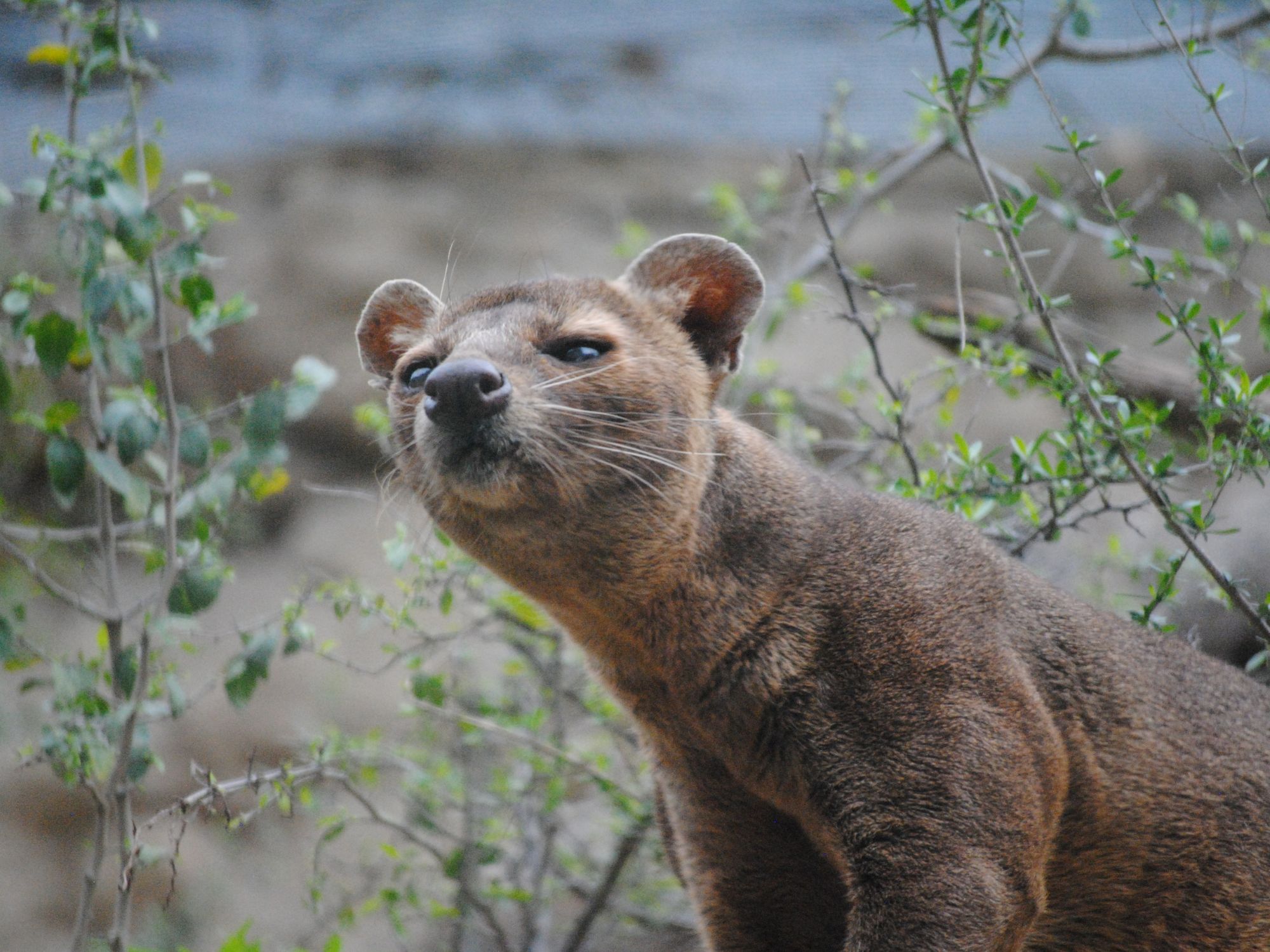
The bring down Baobabs and Tsingy, is a trip of 09days and 08 nights including the Kirindy Forest home of the biggest carnivore of Madagascar called Fossa (Cryptoprocta ferox) and Madame Berthe`s mouse lemur. This is an adventure on an unpaved road through the forest of baobabs, crossing the Tsiribihina River and then arrives in the National Park of Bemaraha. Other wildlife is abundant as well and waits to be discovered: mongoose, sifakas, birds… and giant jumping rats for the luckiest! Do not forget the sunset at the baobabs avenue.
Medium path
Day by day detailed itinerary of Romantic trip – bring down baobabs & tsingy
Arrival at the international airport of Ivato-Antananarivo. Upon arrival, meet with
our staff at the custom area. Assistance for visa delivery and luggage formalities.
Transfer to your hotel. Accommodation on bed and romantic diner basis at
NOVOTEL.
After breakfast, moving toward the airport Ivato for a flight to Morondava capital of
Sakalava tribe. Arrived and welcome at aiport then transfer to hotel.
Accommodation on Half Board basis at PALISSANDRE hotel.
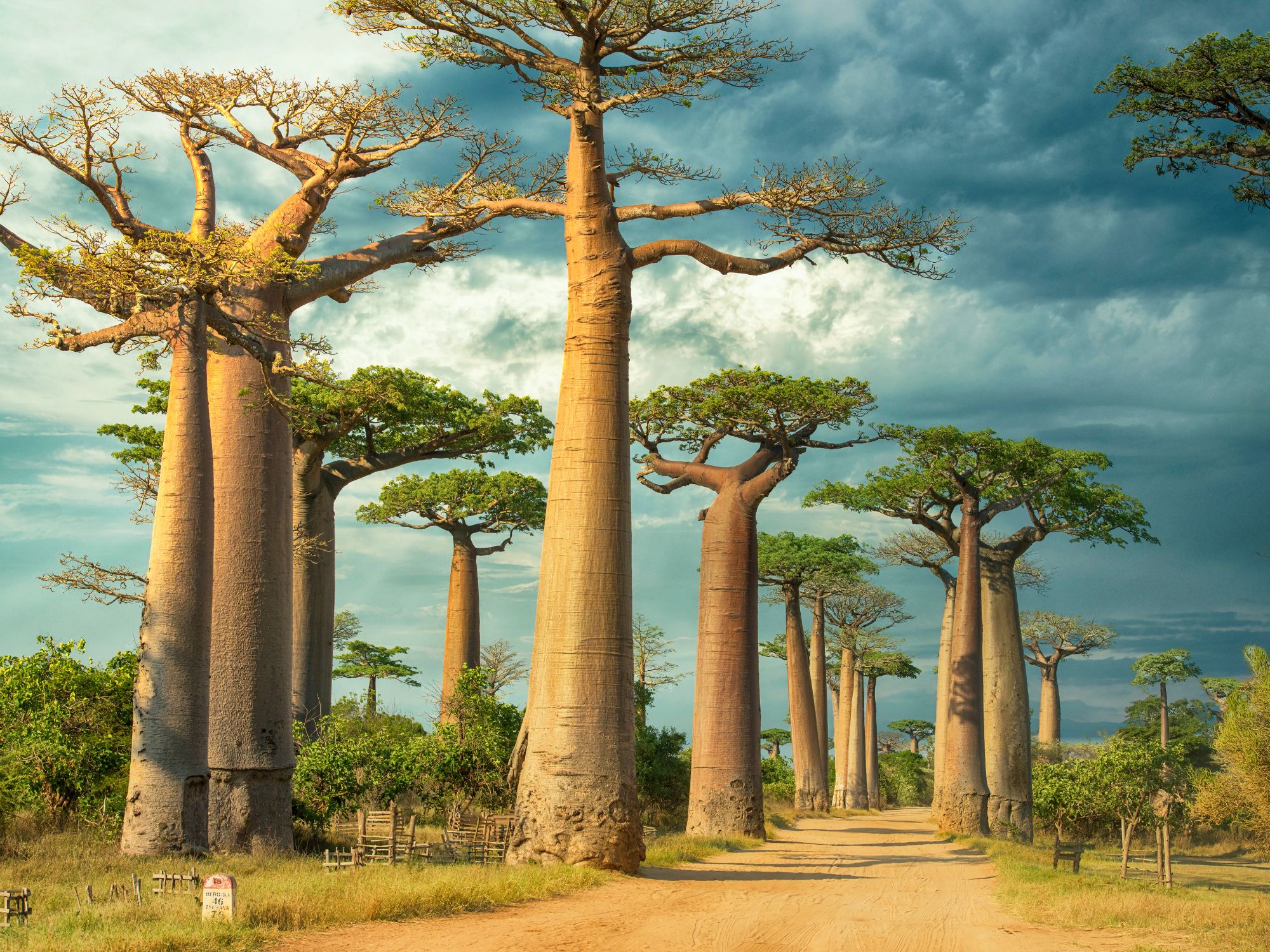
Breakfast at the hotel, leaving for Bekopaka, short stopover in baobabs Twin,
avenue of baobabs. After three hours’ drive transfer by ferry at Tsimafana/direction
to the village of Belo sur Tsiribihina where you will take a lunch. After lunch, four
hours’ drive to get the village Bekopaka of Bemaraha. Arrival and check-in at hotel.
Accommodation on Half Board basis for 3 nights at SOLEIL DES TSINGY hotel
or similar
Early breakfast at hotel, full day to visit of big Tsingy (17km from the village +/
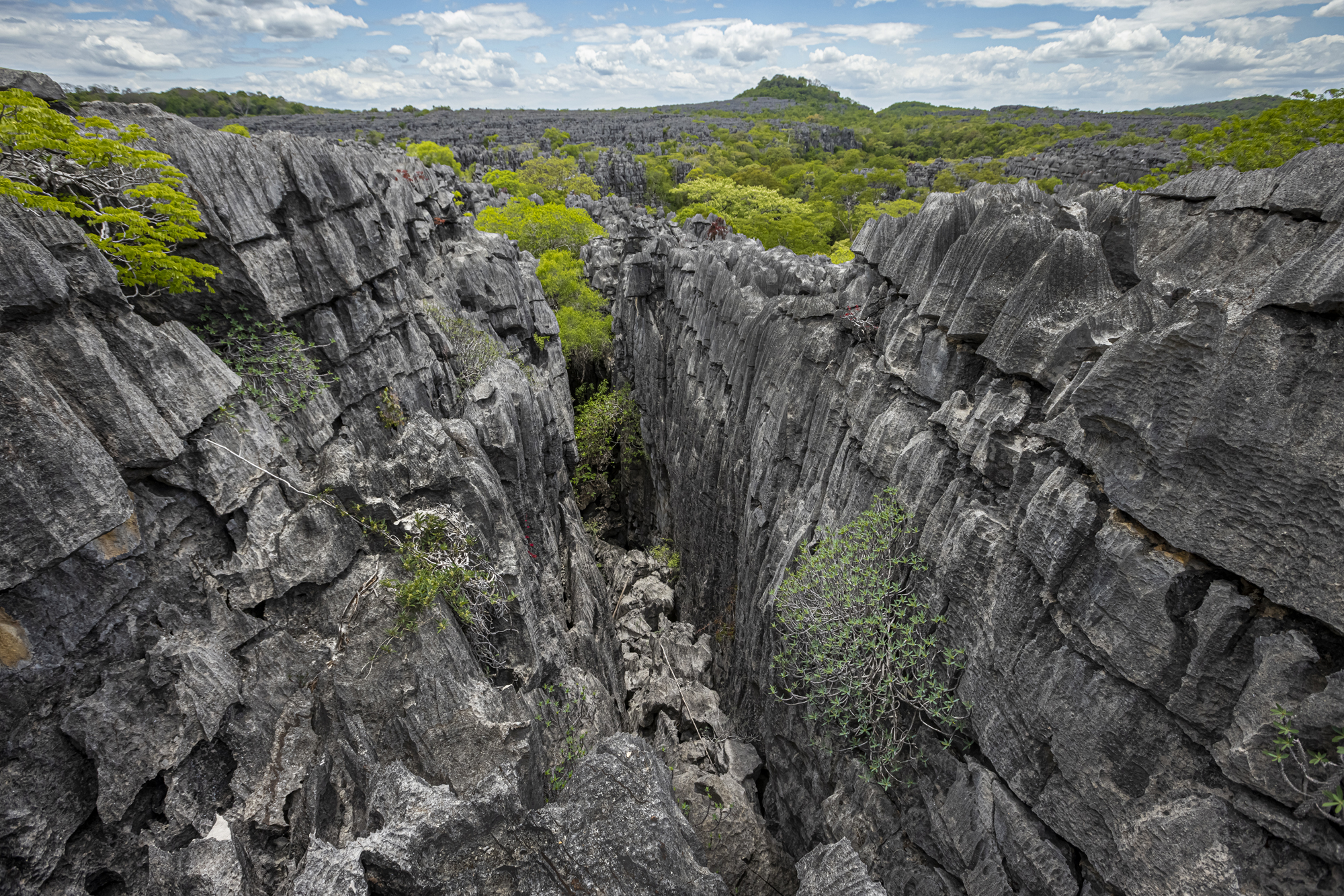
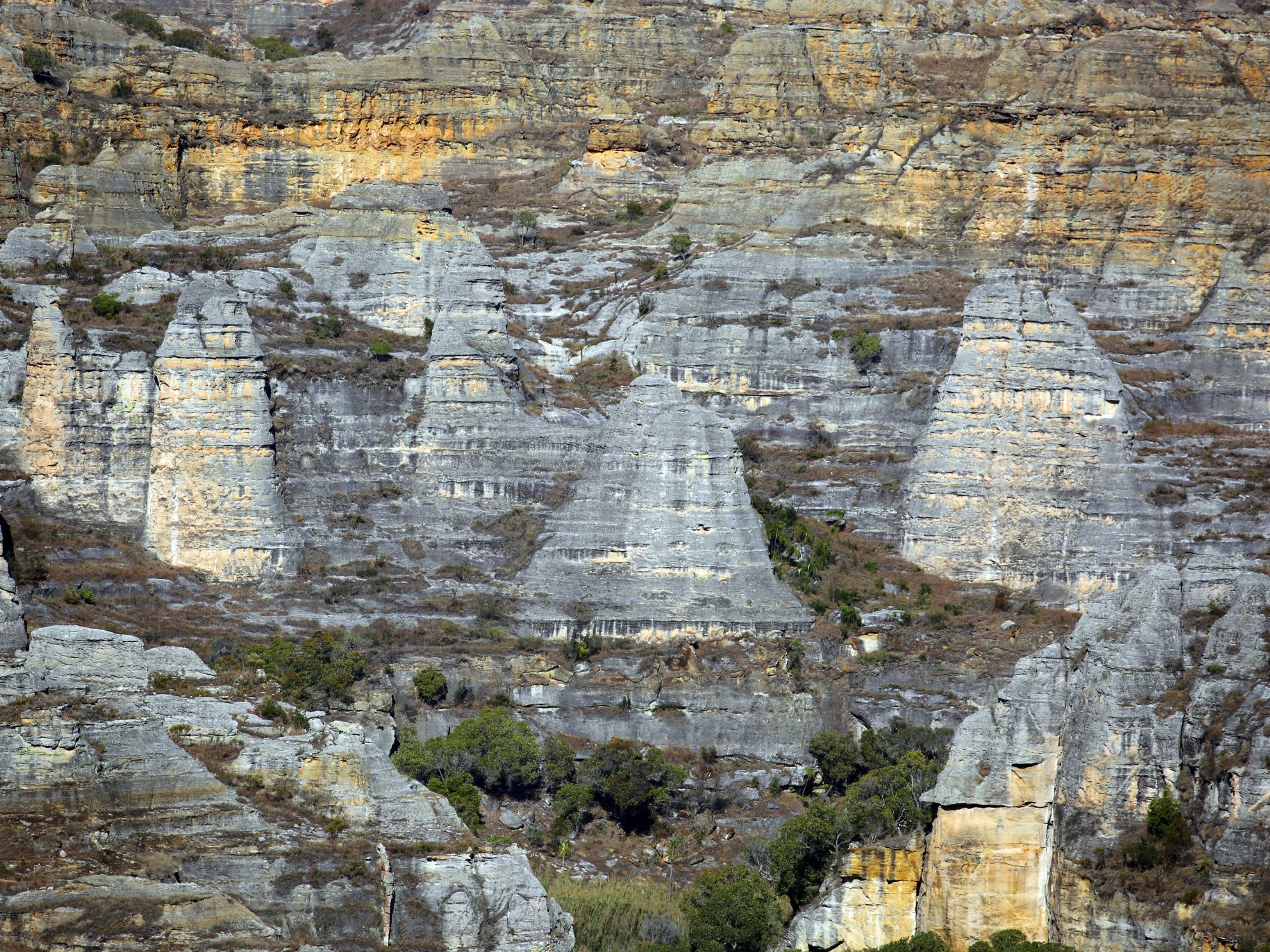
2hours by car). Tsingy of Bemaraha is a world heritage site covering 152,000ha,
the southern half being the national park. It is the second largest protected area on
the island. An extensive area of limestone massif has been eroded into
Madagascar`s largest and most impressive pinnacle karst (Tsingy). Chance upon of
Decken`s Sifaka, red-fronted brown lemur, fat-tailed dwarf lemur and western ring
tailed mongoose during the pic nic lunch. Happen upon coquerel`s coua, crested
coua, greater vasa parrot, Madagascar green pigeon and Madagascar flycatcher
also…
After visit, back to hotel and possibility for swimming pool. Overnight at hotel.
After breakfast, visiting small Tsingy. Take a traditional canoe then following the
Manambolo River cuts of a spectacular gorge through the limestone. Around the
karst grows deciduous forest dominated by dalbergia, Commiphora and Hildegardia
species, and in shady canyons pandanus and ferns flourish. Don`t forget the
Vazimba`s tombs (ancestral of Madagascar), caves of stalactite and stalagmite. Back
to hotel and afternoon free.
After breakfast, leaving toward the south, to get the kirindy forest, this can be one
of the most rewarding wildlife locations in Madagascar, yet it has only recently
received official conservation as part of the Menabe region protected area. Although
previously logged, kirindy remains the best place to see a number of endemic dry
forest species like the giant jumping rat, narrow-striped mongoose, fossa, Madame
Berthe`s mouse lemur, verreaux`s sifaka red-fronted brown lemur, rufous vanga,
blue vanga, Madagascar hognose snake and plated lizard….
Arrival around two hours in the afternoon. Installation at hotel before night walk
inside the forest. Accommodation on Half Board basis at RELAIS DE KIRINDY.
Morning visit inside of Kirindy forest, Kirindy comprises some 10.000ha of
deciduous forest growing on sandy soils of the western coastal plain. The tree
species are similar to other western deciduous forests, with a canopy height
typically of 12 -15m, reaching 20 -5m in more humid areas along watercourses.
Beneath the canopy, throughout much of the forest, the understory and and
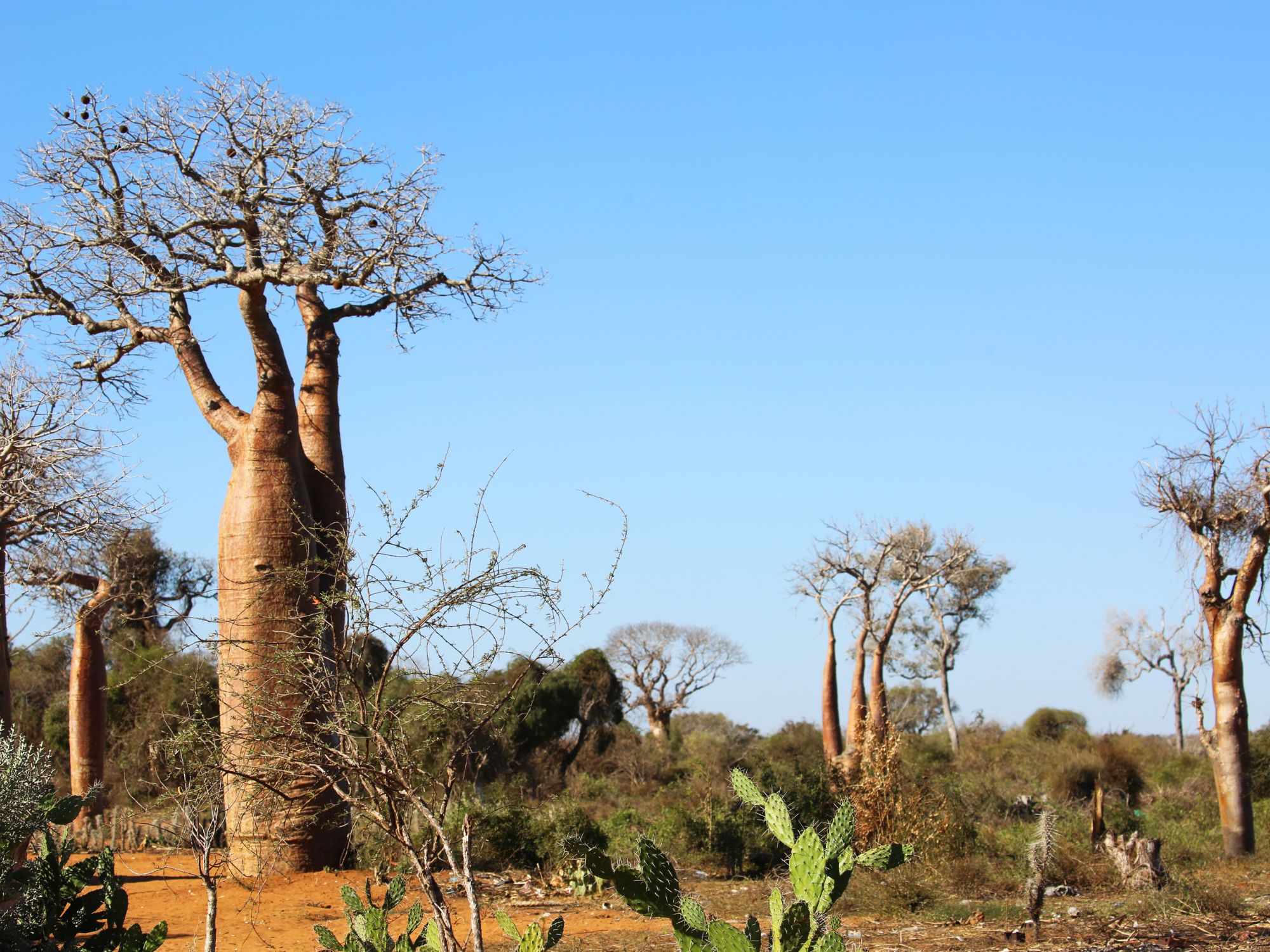
intermediate layer are densely vegetated. Tree species of baobab live here are
Adansonia rubrostipa, Adansonia Za and Adansonia grandidieri, the last being the
largest of the baobabs, sometimes exceeding 30m in height. After the visit, back for
lunch at hotel and then little breath before to take way for sunset at avenue of
baobabs.
Accommodation on Half Board basis at PALISSANDRE COTE OUEST hotel or
similar.
After breakfast, morning visit to the fishermen village of Betania. Taking the
traditional canoe to take that village, you will meet the people on the beach to
prepare the fish and going to the market. Preparing the check out. The way to the
airport then Flight back to Antananarivo. Arrival in Antananarivo, meet and
transfer to your hotel. Accommodation on Half Board basis at AU BOIS VERT
hotel or similar.
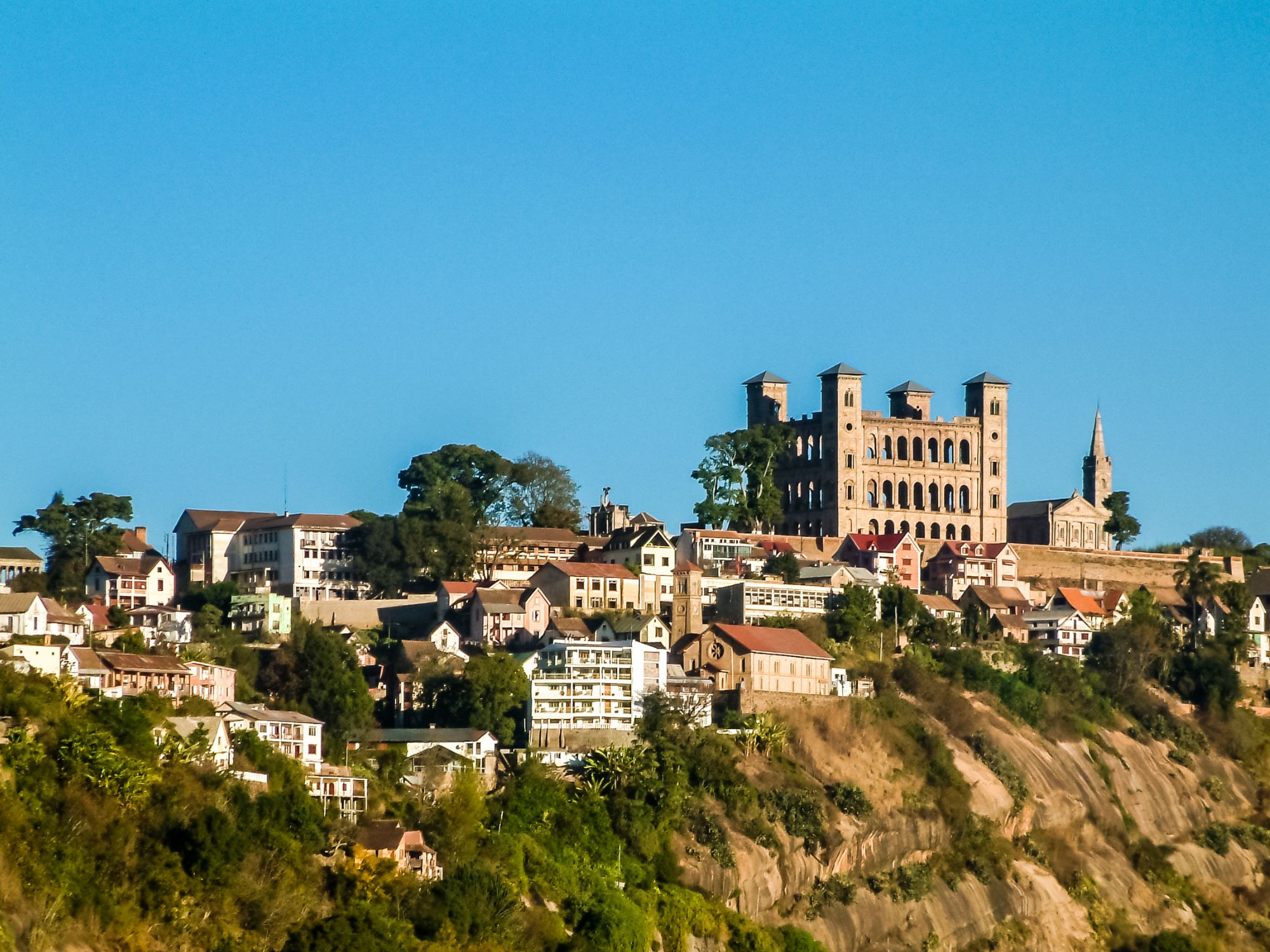
Breakfast at the hotel then transfer to the airport. Possibility to do a city tour of the
town and last shopping at the handcrafts market of la digue before your transfer to
the airport. Assistance for your flight back home.
Pricing, rates and booking conditions for Romantic trip – bring down baobabs & tsingy
Valid from: Mid-May until November
Minimum group size: 02 persons
| Participants | ½ Double (Per Person) |
|---|---|
| 02 PAX | €3 125 |
Supplement for Lunches: €155 per person
Note: Non-refundable and changeable with fees.
Day 10: ANTANANARIVO / MORONDAVA / ANTANANARIVO – Economic class
Estimated fare: From €400 to €500 per person depending on availability at the moment of booking
Essential practical information about Romantic trip – bring down baobabs & tsingy
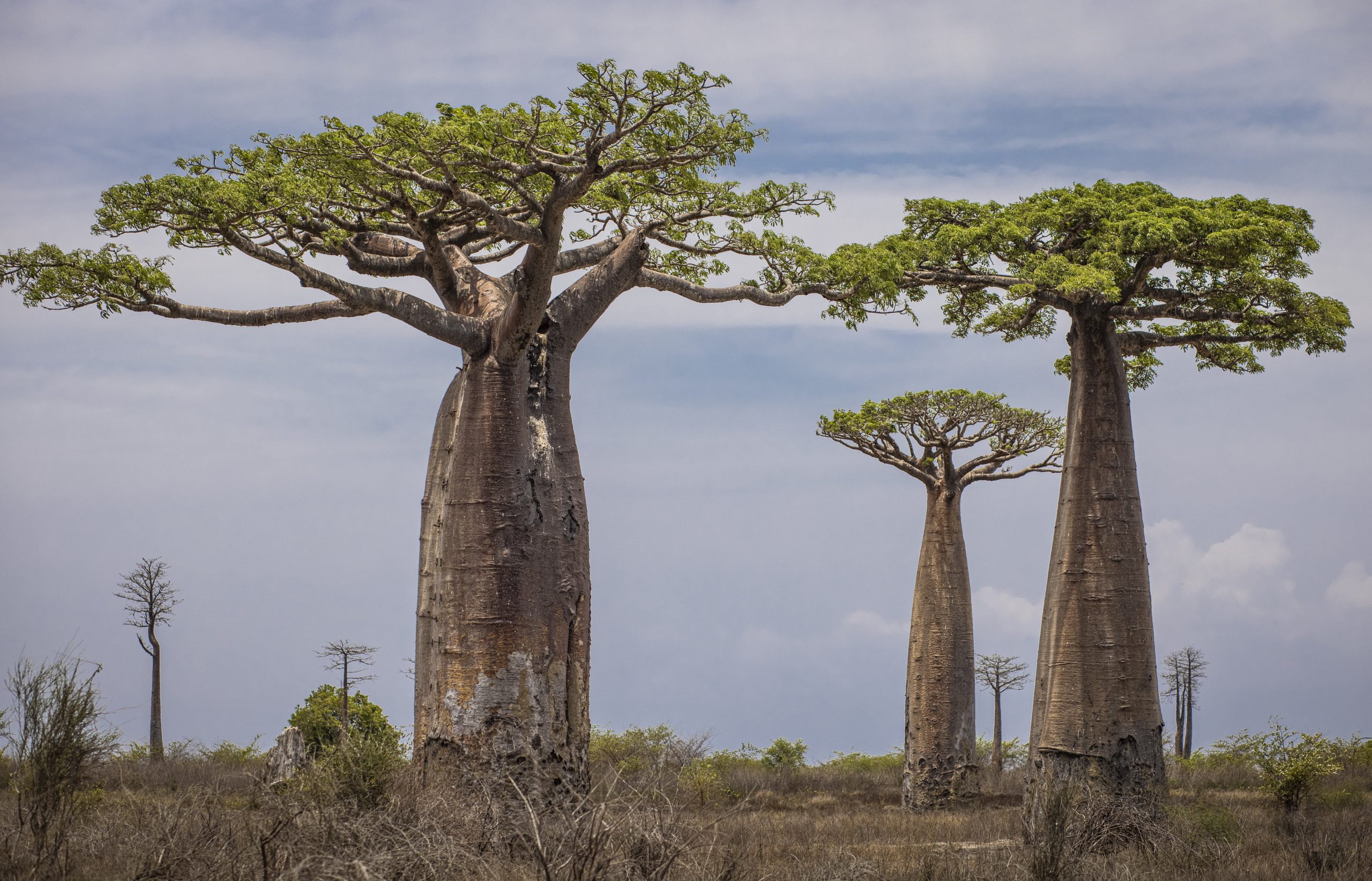
The Western part of Madagascar is mainly a fertile savannah. While travelling southwards, we find a drier, rather bushy territory with astonishing landscapes. Spectacular limestone promontories called tsingy pile up towards the North, whilst bizarre-looking baobabs with immense trunks — that would need several arms of people to stretch around — build fairy tale forests towards the South.
The western coast of Madagascar is much drier than the eastern coast. In general, the climate here is dry tropical. During the dry months between May and November, it does not rain at all and the temperatures are pleasant (20 to 25°C on average). Between December and April, it can rain torrentially or just a couple of showers, depending on the year.
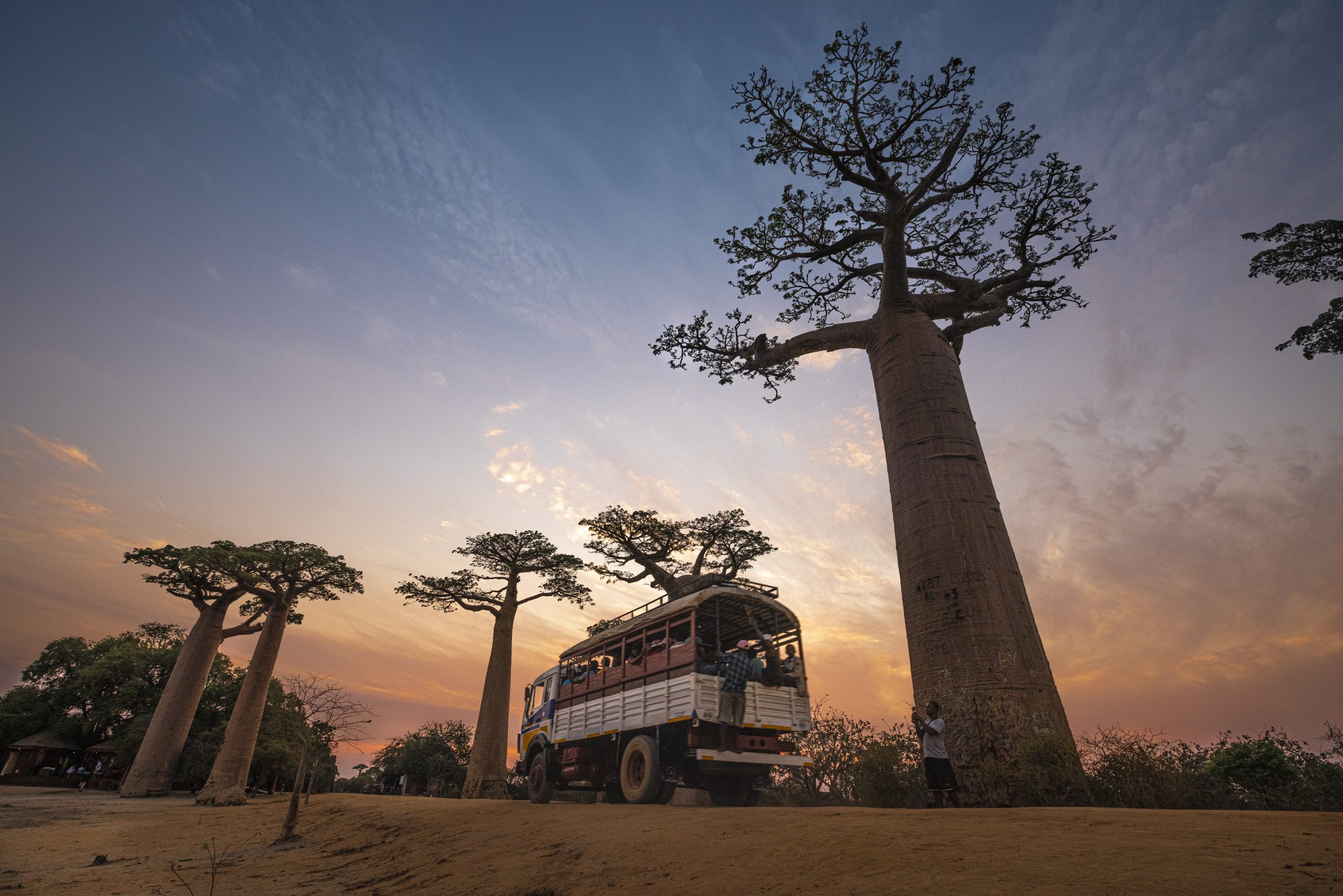
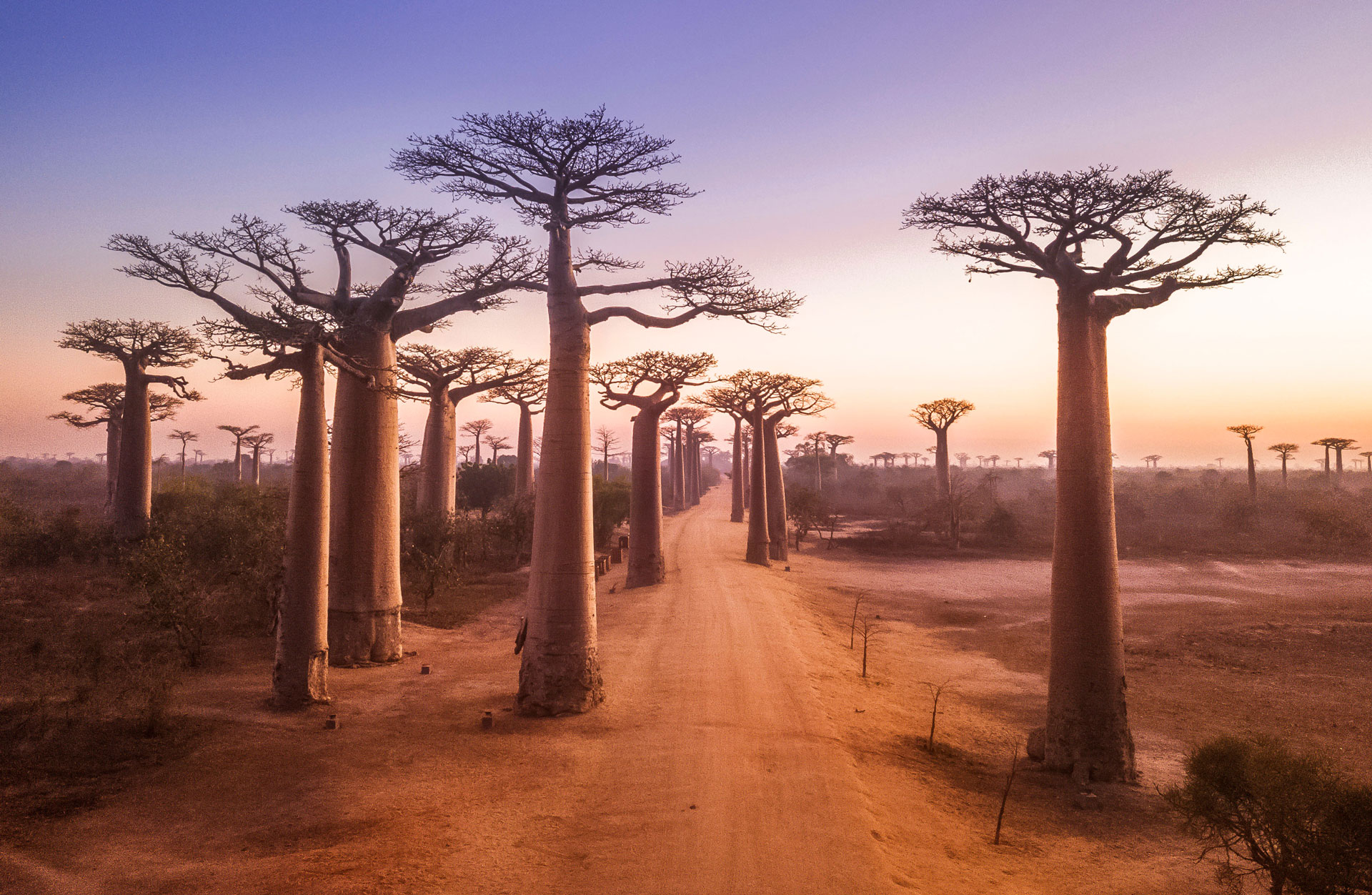
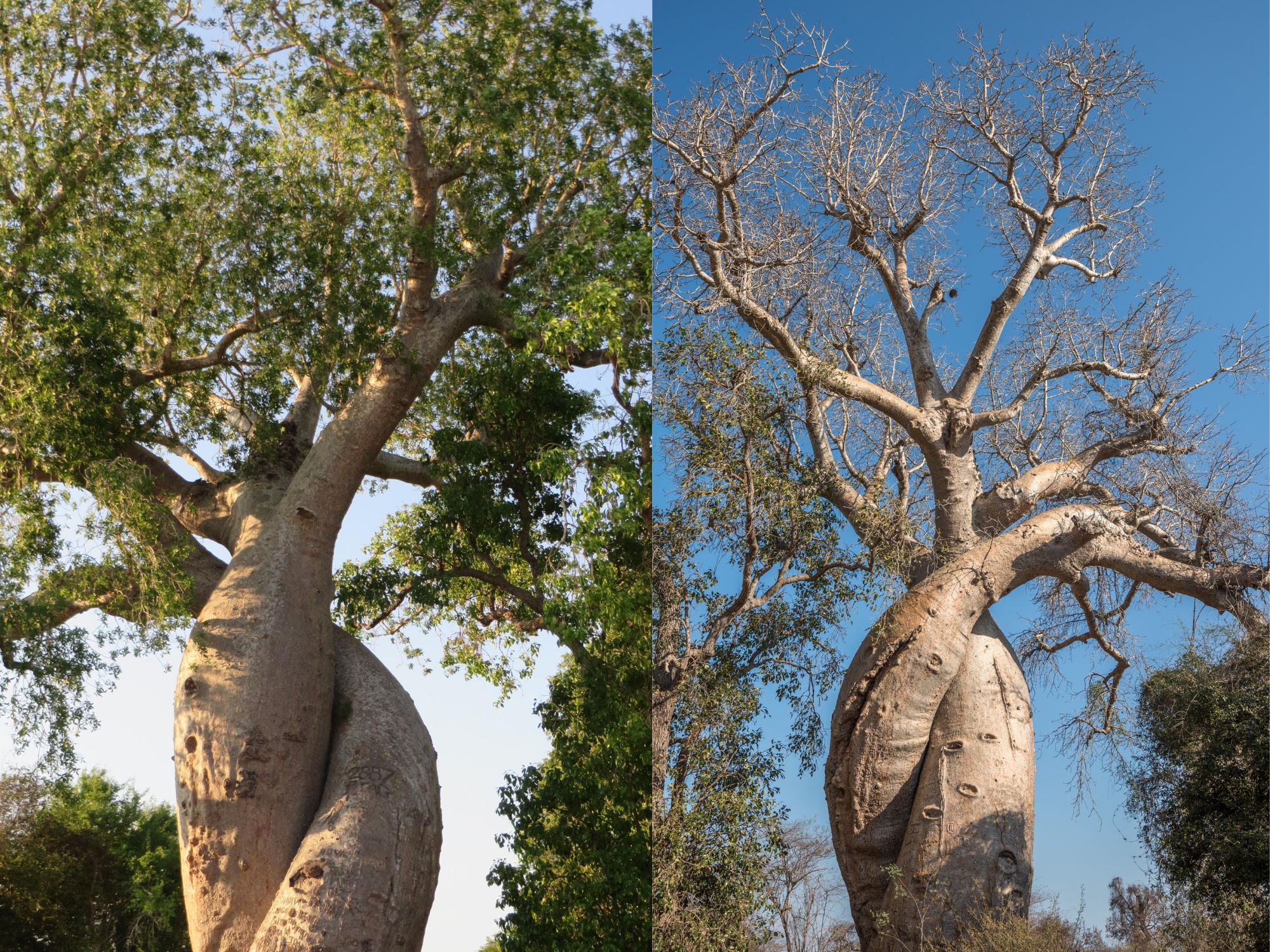
Baobabs in the region of Menabe are endemic trees — “Adansonia grandidieri” — in the dry forest, the only one saved from bushfires. The « Allée des Baobabs », with its magnificent bottle trees 20 km from Morondava (the biggest town in this part of Madagascar), is home to giant baobabs clustering together on both sides of the road. It is just amazing, especially at dawn. The “Baobabs in love” are a pair of interlaced trees.
This can be one of the most rewarding wildlife locations in Madagascar, yet it has only recently received official conservation as part of the Menabe region protected area. Although previously logged, Kirindy remains the best place to see a number of endemic dry forest species like the giant jumping rat, narrow-striped mongoose, fossa, and Madame Berthe’s mouse lemur.
Wildlife-watching is best in spring and summer (March – November), particularly after rain. You may hit the jackpot and witness the extraordinary spectacle of fossa mating.
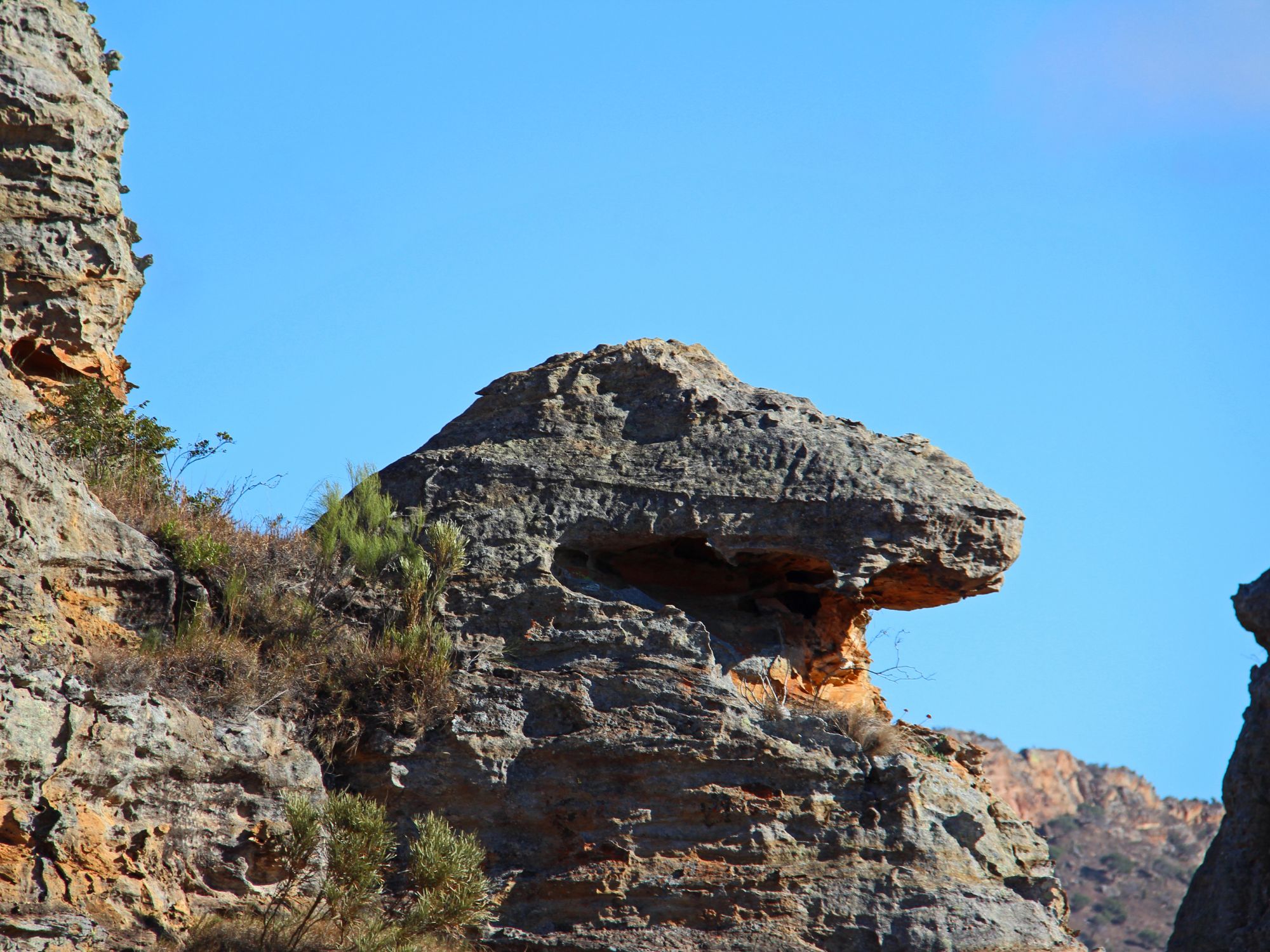
This remote and thrilling limestone region is a UNESCO World Heritage Site covering 152,000 ha, with the southern half designated as the national park. It is the second-largest protected area on the island. An extensive area of limestone massif has been eroded into Madagascar’s largest and most impressive pinnacle karst: the Tsingy.
Discover Madagascar’s most spectacular wildlife and landscapes with our expert-led luxury tours. From the iconic Avenue of the Baobabs to the unique tsingy formations and pristine beaches, we craft unforgettable adventures showcasing the best of Madagascar’s natural wonders and cultural heritage. Your journey of a lifetime starts here.